
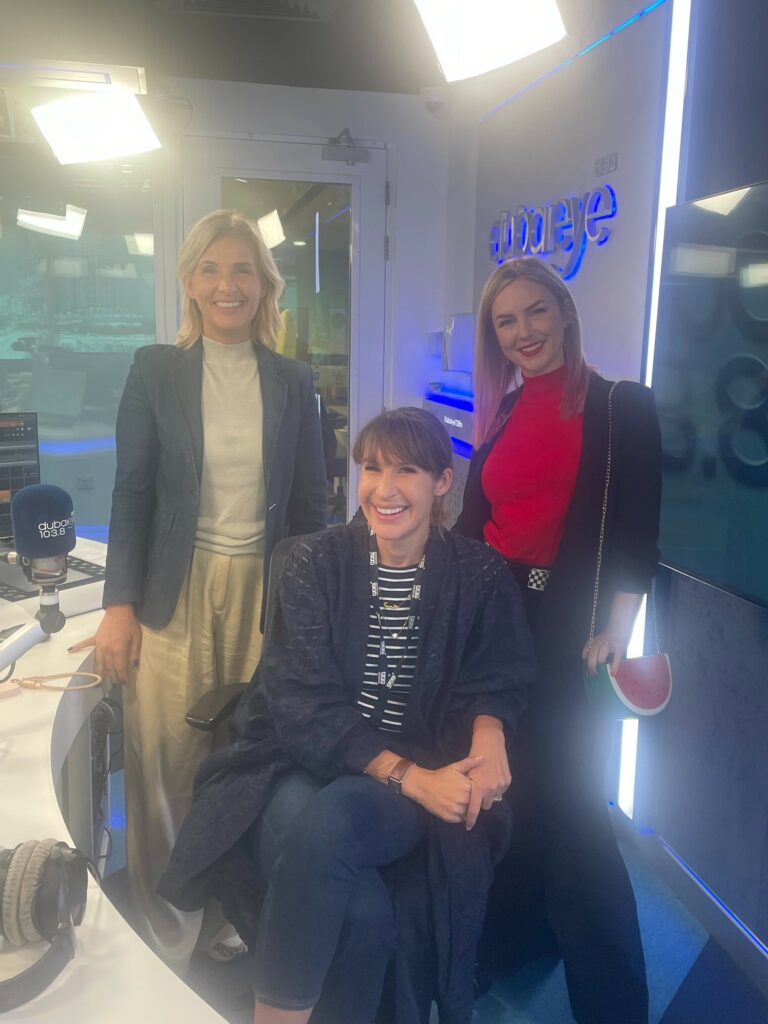
I was recently invited to join Dubai Eye for a conversation with Helen Farmer on work–life balance.
I will be honest upfront. I am not particularly fond of the term. Not because the issue is not real. It very much is. But because the concept itself no longer reflects the reality people are living. Work–life balance suggests that work and life can be neatly separated. As if work is not part of life.
It is.
The conversation on air focused on flexibility, trust and the growing pressure many employees feel today. What follows are some of the reflections that conversation led to. Not all of this was discussed live, but it is the broader context I see every day in recruitment and advisory work.
What we are really seeing
The pressure people experience today is not abstract. It shows up in shorter school hours (at least in the UAE), increased workload intensity and constant availability expectations. Work expands into whatever space is left.
The word balance may be broken, but the pressure is very real. This is not a motivation issue. It is a design issue.
What people are actually asking for
When candidates talk about flexibility, they are rarely asking for less ambition or lower standards. What they are really asking for can be summarised in three words: Predictability. Autonomy. Trust.
- Predictability in how work is organised.
- Autonomy over time, rhythm and focus.
- Trust that performance will be judged on outcomes rather than visibility.
This is a very different conversation from working from home.
What is flexibility anyway?
One of the biggest misconceptions in recruitment conversations is that flexibility equals remote work. It does not.
Flexible work can take many forms:
- Hybrid or remote work
- Flexible start and end times
- Compressed workweeks in specific roles
- Job sharing in niche contexts
- More adaptable time off policies
- And increasingly, customised benefits such as health insurance tiers, allowances, education or childcare support
Flexibility is not a single model. It is a menu of choices. Not every organisation needs to offer every option. What matters is clarity.
Where things break down
Most flexibility initiatives do not fail because of bad intentions. They fail because of inconsistency.
This is the tension that comes up repeatedly in recruitment:
- Policy versus lived reality
- Control versus coordination
Employers optimise for attendance. Employees optimise for life.
When flexibility becomes a control mechanism rather than a coordination tool, trust erodes quickly. Candidates notice that almost immediately.
The recruitment reality
From a recruitment perspective, flexibility has moved from a perk to a credibility test.
Candidates are no longer impressed by vague promises. Phrases like “hybrid where possible” or “flexibility depending on business needs” raise red flags if they are not clearly explained. People do not leave organisations because of policies. They leave because the reality does not match the promise.
A UAE reality check
Compared to Europe, the UAE is not behind. It is just selective.
Legally, more flexibility is possible than many assume. In practice, flexibility is unevenly distributed. Multinationals and regional headquarters tend to move faster. More traditional organisations remain presence driven. Government and semi government entities are evolving, but cautiously.
Where the UAE stands out strongly is in customised benefits. Flexibility in benefits is a key recruitment lever in this region and often matters just as much as where or when work happens.
What actually works
Organisations that get this right tend to focus on four things:
- Clear expectations instead of vague promises
- Managers who can lead outcomes rather than hours
- Honest communication about what is and is not possible
- Work rhythms that respect human reality
Flexibility does not require perfection. It requires coherence.
The real signal
At its core, flexibility is not about comfort. It is about trust.
How an organisation approaches flexible work signals whether people are treated as trusted adults or managed risks. And people make long term career decisions based on that signal.
The future of work will not be won by slogans. It will be won by consistency.
🎧 Listen back
If you would like to listen to the Dubai Eye conversation on work-life balance with Helen Farmer that sparked these reflections, you can find the interview here.