Due to the conflict in the Middle East, something happened in the UAE that most leadership teams won’t immediately see on their dashboards. Engagement doesn’t collapse. It erodes.
It won’t show up in reports.
It won’t be discussed openly in meetings.
But it’s there.
You can feel it. And as leaders, we have to act proactively to stop erosion.
The invisible shift inside companies
Over the past weeks, the focus has been on geopolitics.
But inside companies, something else is happening.
A quieter shift.
- Focus is harder to maintain
- Energy is less consistent
- Teams are more sensitive to signals
- Leaders are carrying more than they show
Not dramatic.
Not visible at first glance.
But real.
The dangerous myth about engagement
Many leaders assume engagement drops suddenly in times of crisis.
It doesn’t.
Engagement doesn’t collapse.
It erodes.
Slowly.
Silently.
And by the time it becomes visible,
the damage is already done.
A familiar pattern
We’ve seen this before.
During Covid.
And we’re seeing it again now, just faster.
Inside almost every organization, three dynamics start to appear:
- The disengaged quietly check out
- The majority hesitates and waits
- The engaged step up… and risk burning out
On the surface, things still look “under control”.
Underneath, performance, innovation, and customer experience start to weaken.
The leadership trap
This creates a difficult paradox for leaders:
- If you push harder → you increase pressure
- If you slow down → you risk losing momentum
- If you do nothing → disengagement spreads
And most leaders try to solve it internally.
That’s where it goes wrong.
Why community becomes infrastructure
In stable times, community feels like a “nice-to-have”.
In unstable times, it becomes something else entirely.
A way to:
- Regulate energy
- Gain perspective
- Test decisions
- Stay connected to reality
Not through theory.
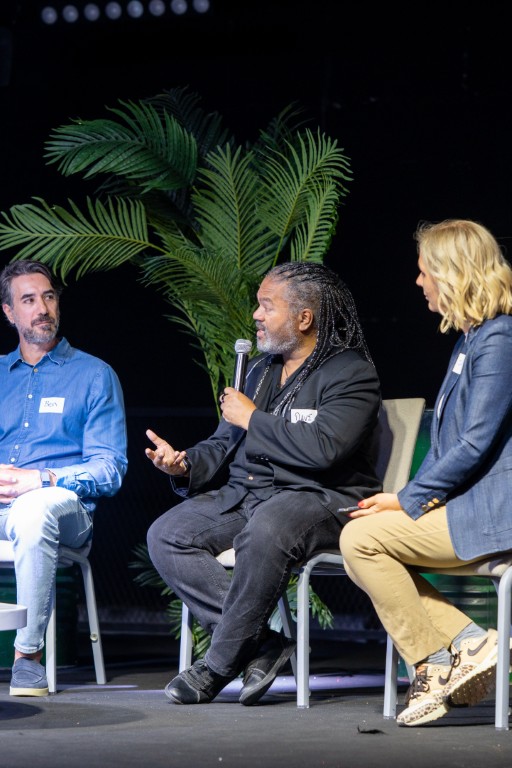
Through real conversations with peers who are facing the same challenges.
What we are seeing on the ground
Over the past weeks, we’ve seen something remarkable.
Despite uncertainty.
Despite pressure.
Despite every reason to postpone.
Leaders still show up.
Not because they have time.
But because they understand something fundamental:
You don’t navigate moments like this alone.
A shift in mindset
The companies that will come out stronger are not necessarily the biggest.
They are the ones that:
- Stay connected
- Keep learning
- Create space for reflection
- Support their leaders
While others go silent.
The next 6–9 months
The coming months will not be defined by one big decision.
They will be defined by small, consistent signals:
- How leaders show up
- How teams stay connected
- How energy is managed
That’s where the real difference will be made.
A personal observation
After 25 years of building communities, one pattern keeps repeating.
In good times, communities grow.
In difficult times, they prove their value.
Not as a concept.
But as infrastructure.
If there is one thing leaders should avoid now, it’s isolation.
Because disengagement doesn’t start with people leaving.
It starts with people disconnecting.
Quietly.
How to step in
If this resonates, there are simple ways to engage with Bravos:
- Join the next Bravos Lab on April 7
Experience the community, gain perspective, and reconnect with other leaders - Become an Individual Member
Commit to your own journey as a leader - Become a Company Member
Give your teams access to a year-round engagement and leadership platform - Book a Private Lab for your team
Bring Bravos directly into your leadership team
Everything is designed to be low-cost, practical, and human.
Accessible in times where resources are limited, but leadership matters most.
Why it matters
By stepping in, you’re not just investing in your company.
You’re contributing to something bigger:
A leadership community in the UAE
focused on engagement, resilience, and transformation.
Yves Vekemans
Founder, Herculean Alliance / Bravos