
Aura
Engaged employees drive customer happiness.
Programs tailored to your organization to measure and improve employee engagement. Build your tribe through our experts, platform and formats.
Employee engagement is our highest priority
In the post-pandemic age of digital transformation, employee engagement should be our top priority!
Nowadays, business leaders are convinced of the power of engaged employees. However, the cultural diversity and four different generations on the work floor are making it even more challenging.
According to Gallup research, companies with engaged employees achieve twice as much revenue and even up to 4 times as much profit compared to other companies. The bad news is that up to 77% of all employees are not engaged or even actively disengaged.
The ideal combination of engaged employees with an organisational fit is unfortunately also the exception to the rule in the UAE. That is exactly what the Herculean Alliance can help you with.
Programs Events Platform Formats
VUCA World
The term VUCA stands for Volatile, Uncertain, Complex and Ambiguous. The term was invented in the US Army and describes the rapidly evolving era after 1990.
The new era has fundamentally changed the role of a leader. The traditional approach to planning and risk management has become virtually impossible. That is a challenge for all organisations today.
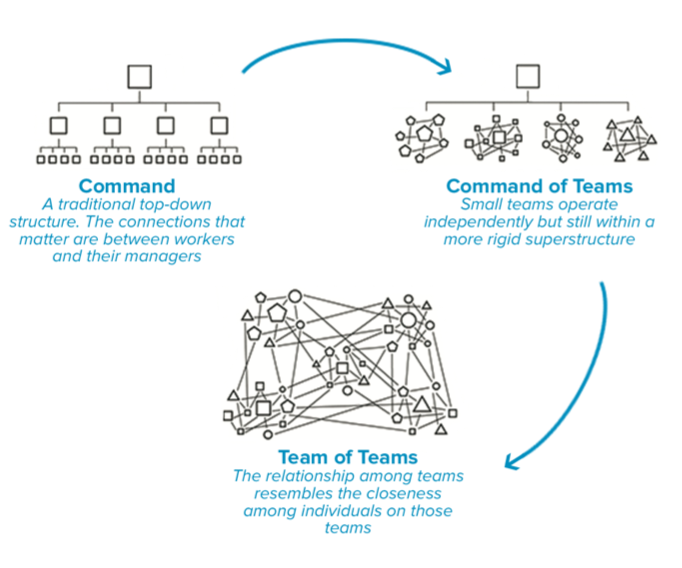
Management models based on sole forecasting and planning are no longer effective. Organisations are forced to be networked rather than to work in silos. A team of teams, a networked organisation can provide an answer to the current challenges.
This requires a shift from efficiency to adaptability. Trust, meaningfulness, shared awareness and the power to act as an individual empower small teams to adapt quickly.
This model of small teams has to be scaled to an organisational level. Innovation and problem-solving are becoming a team effort, rather than the result of a single architect.
Employee Satisfaction x Employee Engagement ^ Trust = Customer Delight
Getting started with employee engagement!
You are not alone on the journey. The Herculean Alliance can be your wingman. We don’t just deliver projects — we help you activate your ecosystem and make your people proud, connected, and confident about the future.
We’re not a typical vendor. And you don’t just get a single advisor. You’ll tap into our entire ecosystem of formats, technology, experts, content, and care, all crafted to fit your unique context.
Who do we help? Leaders like you who want to turn complexity into connection.
• A bank turning a company festival into a journey of connection
• A government team building morale through well-being programs
• A global tech leader engaging their regional leadership in the GCC
• A pharma company tackling post-COVID collaboration
• A family office honouring 50 years of legacy
• A consulting firm recovering its heartbeat after disruption
👉 If this sounds familiar, we’d love to help you write your next chapter.
Step by step guide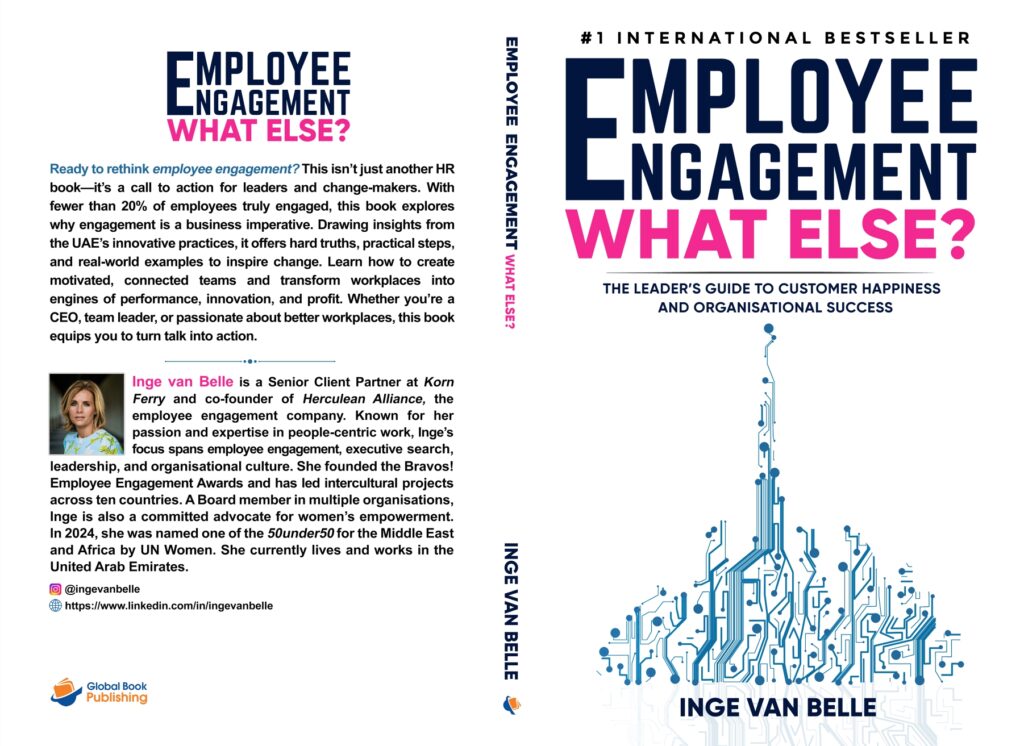
Culture is not what your HR team writes on the wall. It is what your people do when no one is watching.
For twenty-five years we have studied the same question across ten countries and several hundred organisations: What separates the companies where people stay, perform and build something meaningful – from the companies where they quietly look for the exit?
The answer is not engagement scores. It is not leadership style. It is not pay, benefits, perks, or office design. Those are symptoms, not causes. The answer is culture — and specifically, the maturity of the culture an organisation has developed over time.
Most companies are not asking the culture question at the level it deserves. They are running engagement surveys. They are reading dashboards. They are commissioning training. All useful. All insufficient. The deeper question – what kind of culture are we actually building, and is it the one our strategy requires? – sits unaddressed on most boards.
This page is our answer to that question.
Most engagement frameworks were built for a workforce that doesn’t exist in this region.
Gallup’s classic data – that 77% of employees are not engaged – has shaped twenty-five years of HR thinking. The number is real. The framework around it, though, was built for a North American or Western European workforce. Single-language teams. Two generations on the floor. Employees who go home to the same country they grew up in.
That is not the UAE. It is not the GCC. It is increasingly not anywhere in the modern global economy.
In the UAE today, a typical organisation has four generations on the same payroll. 200+ nationalities in the same building. Employees on three-year visas living five timezones from home. A leadership culture where dissent moves through different channels than the ones written into Western HR playbooks. Faith, family, and community structures sit alongside corporate hierarchies in ways that Western models did not anticipate.
The result is that most “engagement programs” running in UAE companies today are measuring the wrong things, talking to the wrong levels, and missing the early signals entirely. They are translating an American framework into Arabic, English and Tagalog and hoping it lands.
It does not. What is needed is a different lens — one that respects the diversity of the workforce, accounts for the realities of the region, and answers the actual question on every senior leader’s mind: what kind of culture have we built, and where does it need to go next?
This is why we developed the Corporate Culture Maturity Model.
The Corporate Culture Maturity Model.
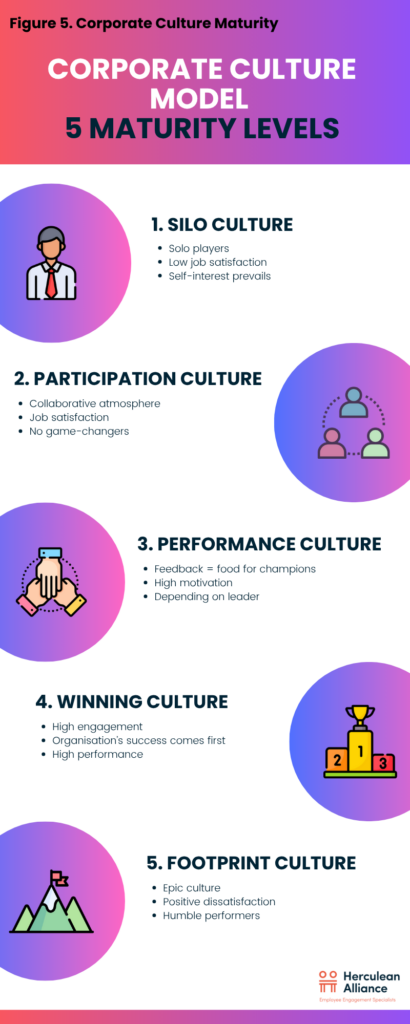
We have observed five phases of corporate culture across our work in the UAE, Belgium, and the wider international footprint of our methodology.
These are not five rungs on a ladder. Each phase exists in real organisations, sometimes for years. Each has its own logic, its own strengths, its own limits. The point of the model is not to push every company toward Phase 5 — it is to give senior leaders a clear way to recognise where their organisation actually sits, what that means, and what it would cost (and unlock) to move.
Phase 1 — Silo Culture
The default phase. Solo players. Self-interest prevails. Job satisfaction is low because there is no shared sense of belonging — only individual performance and individual reward.
You see Silo Culture in organisations where departments compete for budget more than they collaborate on outcomes. Where information is currency, hoarded rather than shared. Where the strongest performers are individuals, not teams. Where leadership is transactional: hit your number, get paid.
Silo Culture is not always wrong. In some industries — high-end professional services, transactional sales — individual performance is the model. The problem is when an organisation defaults to Silo Culture without choosing it, or when leadership wants something more but the operating system still rewards solo players.
Symptoms:
- High individual performance, low team performance
- Information stays in departments
- Talent retention is below industry average
- Engagement surveys read as polite, never as committed
Phase 2 — Participation Culture
The first move out of silos. Collaborative atmosphere emerges. Job satisfaction rises because people feel they belong to a group, not just a payroll. Meetings are friendly. Internal communication improves. Cross-functional projects start to work.
What is missing in Participation Culture is the second half of performance. People are happy to be there. They like each other. They are not yet game-changers.
Participation Culture is comfortable, which is exactly why it is hard to leave. Senior leaders often mistake Participation Culture for the destination — the engagement scores look good, the office is pleasant, retention is healthy. But the company is not winning at the level its strategy requires.
Symptoms:
- Strong engagement scores, particularly on “I like my colleagues”
- Healthy retention, low ambition
- Decisions take a long time because everyone is consulted
- The competition is moving faster
Phase 3 — Performance Culture
The phase where motivation and excellence enter the picture. Feedback becomes food for champions. High motivation. High output. The organisation begins to win.
The challenge in Performance Culture is that it often depends on a small number of leaders. A charismatic CEO. A brilliant department head. A founder who carries the energy of the room. The culture exists because of them, not yet because of the system.
When the key leader leaves, gets promoted, retires, or burns out — the culture can collapse back to Phase 2 or worse. This is where most growth-stage and post-restructure organisations get stuck. The performance is real. The dependency is also real.
Symptoms:
- Strong performance under current leadership
- “What if [key person] leaves?” is the silent question on the board
- Succession planning is shallow
- High performers cluster around specific leaders
Phase 4 — Winning Culture
The phase where the culture becomes structural. High engagement. High performance. The organisation’s success comes first — not by sacrifice, but by alignment. People are proud to be part of something that is winning.
Winning Culture survives the departure of individual leaders because it is encoded in the operating system. Hiring practices. Onboarding rituals. Performance management. Recognition. The way decisions get made. The way conflict gets handled.
Winning Culture is rare. Most organisations who claim it are actually in Phase 3 — Performance Culture with strong leaders. Real Winning Culture continues delivering when the leaders who built it are no longer in the building.
Symptoms:
- Performance survives leadership transitions
- Cultural fit is taken seriously in hiring
- The organisation has a recognisable “way of doing things”
- Retention of top performers exceeds industry standards significantly
Phase 5 — Footprint Culture
The phase where the organisation moves from winning something to building something that lasts. Epic culture. Positive dissatisfaction — the productive restlessness that comes from caring deeply about what you leave behind. Humble performers — people who are exceptional and do not need to be told.
Footprint Culture is what some of the most respected organisations in the world have achieved: not just market dominance, not just employee engagement, but a sense of meaningful contribution to something larger than the quarterly result. A footprint.
This is the phase where the question shifts from “how are we doing?” to “what are we leaving behind?” — for our people, our industry, our region, our planet.
Footprint Culture is not for every organisation, and not at every stage. But for the ones who want it, it changes everything about how they recruit, lead, decide and grow.
Symptoms:
- Decisions reference long-term impact, not just quarterly results
- Employees stay through difficult periods because the work matters to them personally
- The organisation is known beyond its market for what it stands for
- Recruitment becomes self-selecting — the right people apply, the wrong ones do not
Three uses, three audiences.
The Corporate Culture Maturity Model is not a sales tool. It is a thinking instrument.
We use it in three ways:
1. For boards and senior leaders, as a diagnostic mirror.
When we begin an Aura advisory engagement, the maturity model is one of the lenses we apply to the organisation’s current state. Where does the culture actually sit? What phase is the leadership pointing toward, even if they cannot name it? Where are the inconsistencies — for example, leadership rhetoric pointing to Winning Culture while operations remain in Silo? The model surfaces those gaps in language a board can act on.
2. For HR and culture teams, as a planning framework.
Engagement programmes, leadership development tracks, recognition systems — these get built differently depending on where the culture currently sits. A Silo Culture organisation does not need a year-long well-being programme; it needs trust-building between departments. A Performance Culture organisation does not need more leadership development at the top; it needs to broaden the bench. The model helps culture teams design interventions that match the actual phase, not the aspirational one.
3. For boards considering succession, restructure, or growth, as a stress test.
When an organisation is about to undergo significant change — new CEO, post-merger integration, regional expansion, IPO preparation — the maturity phase predicts a lot about how that change will land. A Performance Culture organisation that loses its anchor leader is at high risk of regression. A Winning Culture organisation can absorb leadership change without losing its way. The model gives boards a structured way to think about these transitions before they happen.
Where the model comes from.
The Corporate Culture Maturity Model emerged from twenty-five years of practice — designing engagement programmes, advising senior leaders, and observing what worked and what did not across hundreds of organisations.
It was codified in 2024 in Employee Engagement, What Else?, the book by our co-founder Inge Van Belle, launched in Dubai.
The model has been refined through application across:
- Industries: financial services, energy, automotive, government, education, technology, consumer goods, healthcare, hospitality
- Geographies: the UAE, the wider GCC, Belgium, Netherlands, Germany, France, Spain, Poland, Lithuania, the United States, South Africa
- Organisation sizes: from 60-person companies to 30,000-person government bodies
- Cultural contexts: Western European, Anglo-Saxon, Levantine, GCC, South Asian, and combinations of all of these inside single multinational organisations
What has held constant across all of these is the five-phase structure. What has varied is the speed of transition, the dominant factors at each phase, and the cultural-regional inflections of how Phase 5 — Footprint Culture — gets expressed.
The model is not finished. We continue refining it. But it is mature enough now to be useful to any board willing to sit with the question of where we are, and where we want to go.
What we have learned across the phases.
Across the work, certain patterns recur. We share them here because they are useful to senior leaders thinking about their own organisation.
Most organisations are not where they think they are.
Boards and senior leaders consistently overestimate the maturity of their culture. The phase the leadership describes is usually one above the phase the operational reality reflects. This is not because leaders are dishonest – it is because leaders see what is visible at their level, which is rarely the full picture.
Movement between phases is not linear.
An organisation can move from Performance Culture (Phase 3) directly into Footprint Culture (Phase 5), bypassing Phase 4 entirely, if the right combination of strategy, leadership and external circumstance aligns. Conversely, organisations can regress – a Winning Culture under stress can collapse to Phase 2 or even Phase 1 if the operating system fails.
Phase 5 is harder to enter than to recognise from outside.
Footprint Culture organisations are visible from the outside — people talk about them, the press writes about them, their reputation precedes them. But entering Phase 5 from inside is difficult. It requires a level of collective humility and ambition that most organisations cannot sustain through quarterly cycles. The ones who do — and there are some, in this region as elsewhere — have made decisions that look strange from the outside until they make sense.
The wrong intervention can stall a culture for years.
A team-building event in a Silo Culture organisation produces no lasting effect. A leadership-development programme in a Performance Culture without succession depth strengthens the dependency rather than reducing it. The intervention has to match the phase. Otherwise it costs money and confidence without changing the underlying culture.
Culture is built on the operating system, not on the events calendar.
Engagement events, family days, leadership retreats — all of these have their place. But they do not change the maturity of a culture. What changes maturity is the operating system: hiring, onboarding, performance management, recognition, decision-making, conflict resolution. The events make the operating system visible and celebrated. The operating system makes the events meaningful.
If you have read this far.
If you have read to this point, you are asking the culture question seriously.
We do not put a contact form at the bottom of this page. The manifesto is not a lead generation device. It is the thinking that sits under everything else we do.
If, having read this, you want to talk — about your organisation, about a specific transition you are preparing for, about a culture question you cannot quite name — there are three places you can go from here:
The advisory page, which explains our structured engagement work for boards and senior leaders
The book, Employee Engagement, What Else?, where the framework is fully developed
The Bravos community, where senior peers gather monthly to discuss exactly these questions
Or you can simply close the tab, hold the model in mind, and look at your own organisation through it for a week. That is also a legitimate use of what is here.